
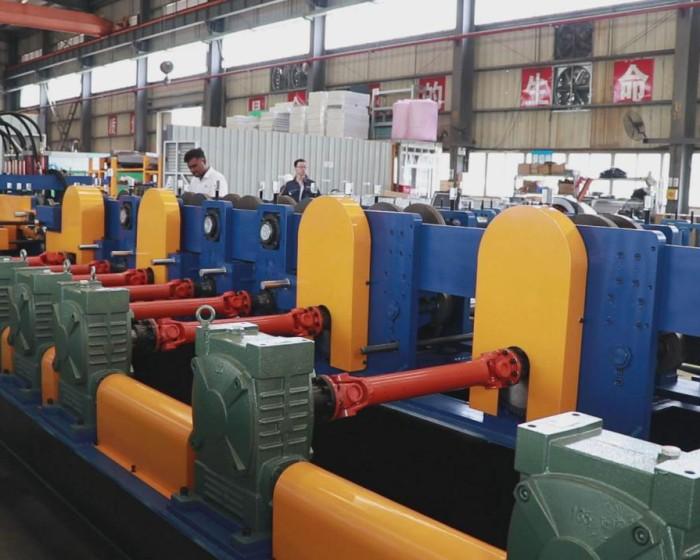
Modern industries are continuously searching for advanced manufacturing solutions that can improve efficiency, accuracy, and production capacity. As the demand for high-quality metal components increases, businesses need reliable equipment that can deliver consistent results while reducing operational challenges.
Industrial roll forming machines have become an important part of modern manufacturing because they provide a fast and precise method for producing metal profiles. These machines help manufacturers create strong, durable, and accurately shaped components for construction, infrastructure, and various industrial applications.
With advanced automation features and improved engineering, purlin roll forming machine technology supports businesses in achieving better productivity and long-term manufacturing success.
What Is an Industrial Roll Forming Machine?
An industrial roll forming machine is specialized equipment designed to shape metal sheets into specific profiles through a continuous forming process. The machine uses a series of rollers that gradually bend and form the material into the required design.
Unlike traditional fabrication methods, roll forming allows manufacturers to produce large quantities of metal components with consistent quality. The controlled process improves accuracy and reduces unnecessary material waste.
These machines are widely used because they combine speed, reliability, and flexibility for different production requirements.
How Roll Forming Machines Improve Manufacturing Efficiency
Efficiency is one of the biggest priorities in modern industrial production. Businesses need machinery that can increase output while maintaining quality standards.
Industrial roll forming machines help achieve this goal by supporting continuous production. Instead of completing multiple separate fabrication steps, manufacturers can create finished profiles through a streamlined process.
This reduces production time, improves workflow, and allows companies to handle larger manufacturing demands.
Key Benefits of Industrial Roll Forming Technology
High-Speed Production
One of the main advantages of industrial roll forming machines is their ability to support high-volume production. These systems can operate continuously, making them ideal for industries that require large quantities of metal components.
Faster production cycles help businesses meet customer requirements while maintaining efficient operations.
Consistent Product Quality
Maintaining product consistency is essential in industrial manufacturing. Small variations in metal profiles can affect installation and performance.
Roll forming machines use precise forming methods and advanced control systems to create uniform products. This ensures every component meets the required specifications and improves overall reliability.
Reduced Material Waste
Material efficiency has become a major focus for modern industries. Traditional manufacturing methods may create more waste due to cutting and repeated processing.
Industrial roll forming technology optimizes material usage by shaping metal directly into the desired profile. This reduces waste and helps manufacturers lower production costs.
The Importance of Purlin Roll Forming Machines
Structural steel components are essential in many construction projects, and purlins provide important support for roofs and steel frameworks. Producing these components requires accurate and efficient machinery.
A purlin roll forming machine is designed to manufacture strong and precise purlin profiles through a continuous forming process. These machines help manufacturers achieve reliable production while maintaining consistent dimensions.
For companies involved in steel construction and building material production, purlin forming technology provides an effective way to improve manufacturing performance.
Automation in Industrial Roll Forming Systems
Automation has transformed the manufacturing industry by improving speed, accuracy, and production control. Modern roll forming machines include advanced automated features that reduce manual involvement.
Automated feeding systems, digital controls, and precision cutting solutions allow production lines to operate more smoothly. These technologies help businesses improve efficiency and reduce the chances of production errors.
Automation also allows manufacturers to better manage resources and maintain consistent output.
The Role of Automatic Stacking in Production Lines
Efficient handling of finished products is an important part of industrial manufacturing. After metal profiles are produced, proper organization and storage help maintain smooth operations.
Automatic stacking systems help arrange completed products in a structured way. This reduces manual handling requirements and makes transportation and storage more efficient.
By integrating automatic stacking into roll forming production lines, manufacturers can create a more organized and productive manufacturing environment.
Common Applications of Industrial Roll Forming Machines
Industrial roll forming machines are used in many sectors, including:
- Steel construction projects
- Roofing and wall panel manufacturing
- Industrial buildings
- Warehouse structures
- Structural framing systems
- Automotive components
- Customized metal profiles
Their flexibility allows manufacturers to create different products based on specific industry requirements.
Factors to Consider When Choosing a Roll Forming Machine
Selecting the right industrial roll forming machine is an important decision for any manufacturer. Businesses should evaluate several factors before making an investment.
Important considerations include production capacity, material compatibility, machine durability, automation features, and maintenance requirements.
A suitable machine should provide stable performance, accurate production, and the ability to adapt to future manufacturing needs.
The Future of Industrial Roll Forming Technology
The future of roll forming technology is focused on smarter automation, improved efficiency, and better production control. As industries continue adopting advanced manufacturing systems, intelligent roll forming solutions will become increasingly important.
Manufacturers that invest in modern machinery can improve productivity, reduce waste, and stay competitive in a rapidly changing industrial environment.
Conclusion
Industrial roll forming machines have become a valuable solution for modern manufacturing because they provide accuracy, speed, and reliable performance. These machines help businesses produce high-quality metal components while improving efficiency and reducing production challenges.
With advanced solutions such as a purlin roll forming machine and automatic stacking systems, manufacturers can achieve better workflow management and stronger production capabilities. As industrial demands continue to grow, roll forming technology will remain an important part of future manufacturing development.